
Teaching English in Korea can be one of the most rewarding adventures of your life. Yet it can also be one of the most challenging. Many of us arrive full of energy and dreams, only to find ourselves weighed down by curriculum demands, cultural misunderstandings, or the sheer grind of daily classes.
I want to share with you something that completely transformed my teaching — and more than that, transformed my students. But first, let me tell you how it began.
Part 1: Arriving in Korea – The Struggle to Learn
When I first got to Korea, I was completely dazzled by the language and culture. The sounds mystified me. I’d hear a foreigner say just a few Korean words and feel utterly enchanted. I wanted that ability.
I bought books, but most of them were confusing. They focused on honorifics and formal endings — not on regular, everyday conversation. Koreans themselves often couldn’t explain their language clearly to a beginner, so I felt stuck.
The breakthrough came when I met a few foreigners who were already fluent and articulate about Korean. They simplified the structure, showing me the roots of the language without drowning me in complicated endings. Suddenly, Korean started to make sense.
Part 2: Turning Teaching Into Chant
As I began to get the basics, I thought: why not share the most important English conversational terms in the same way?
At first I tried dictation, but it quickly became boring. One day, a Korean student and I had an idea:
- What if we turned the words into a chant?
- What if we recorded it?
- What if we made it into a video?
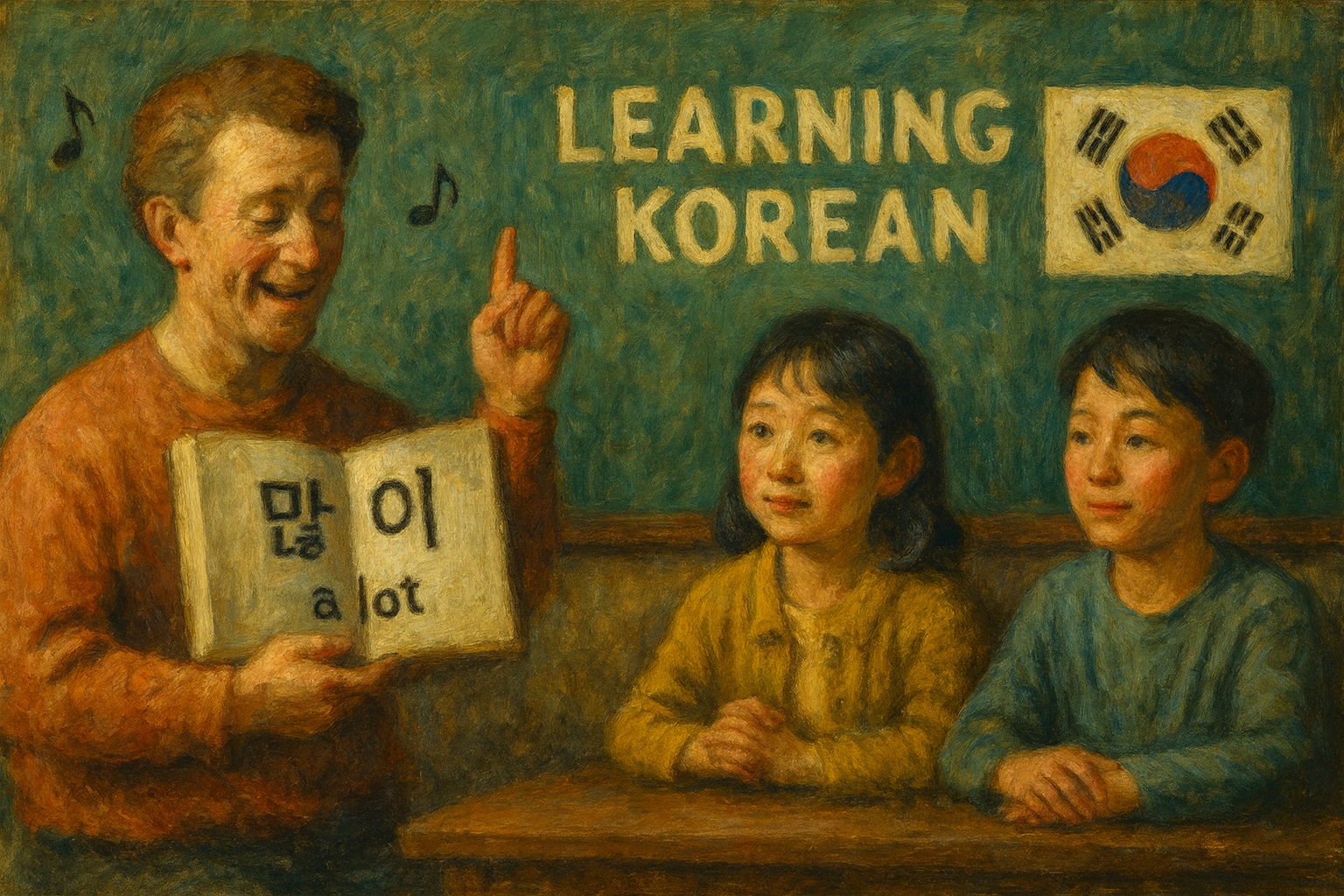
That was the spark. By combining rhythm, visuals, and music, we turned ordinary vocabulary into something alive. Students weren’t just memorizing — they were singing, laughing, and embodying the language.
And here was the surprising bonus: while teaching English this way, I found I was learning Korean faster too. Once we had the words down, we began attaching simple sentences to each, which naturally introduced grammar. This became a two-way exchange — English for them, Korean for me — all built on rhythm and joy.
In coordinated public school programs, it was incredibly successful. Students absorbed the language faster, teachers had fun, and the classroom energy shifted from stress to excitement.
Why This Works in Korean Classrooms
Korean students live in a world where English is tied to exams, status, and pressure. That creates stress and, sometimes, resistance. But when you present English as rhythm, song, and play:
- The stress dissolves. Students stop worrying about mistakes.
- The body gets involved. Rhythm and movement anchor memory.
- Emotions engage. Words like “very good” or “number one” create joy and pride.
- Repetition becomes fun. Instead of drills, you’re making music.
And here’s the most important part: in traditional classrooms, words often go in one ear and out the other. Students cram, forget, and repeat the cycle. But music changes that. Words sung, chanted, or clapped stay in the body. They are absorbed, remembered, and carried for life. Through this kind of joyful repetition, students don’t just know the words — they own them, perfecting pronunciation naturally along the way.
Practical Steps You Can Try
- Build a Word List: Choose 5–10 high-frequency, emotional words.
- Add Rhythm: Clap, stomp, or tap a beat while students chant.
- Make It a Game: Use call-and-response (“Teacher: Very good! Students: Very bad!”).
- Layer It Into Dialogue: After chanting, have students use the words in a quick conversation.
- Keep It Playful: Smile, laugh, exaggerate — your energy is as important as the words.
The Spiritual Side
Teaching is not just about transferring vocabulary. It’s about awakening energy in the classroom. When you bring love, creativity, and presence, you create an atmosphere where students feel safe to open up. That energy stays with them far longer than the words themselves.
A Final Encouragement
If you’d like to see this method in action, I encourage you to check out the Very Good Words #1. For new learners, though, the first step is always the Korean alphabet. Hangul is the easiest alphabet in the world, and I often taught it in just 20 minutes. Once you know the letters, the song becomes a powerful tool: listen, repeat, and go over the words until they sink in. Later, as you grow more familiar, you can simply watch the video without support — or even double the playback speed to challenge yourself. In this way, the chant grows with you, adapting to your level and keeping the learning fresh.
Leave a Reply